Clinician’s lockdown gaming inspires virtual reality dialysis training for patients at home
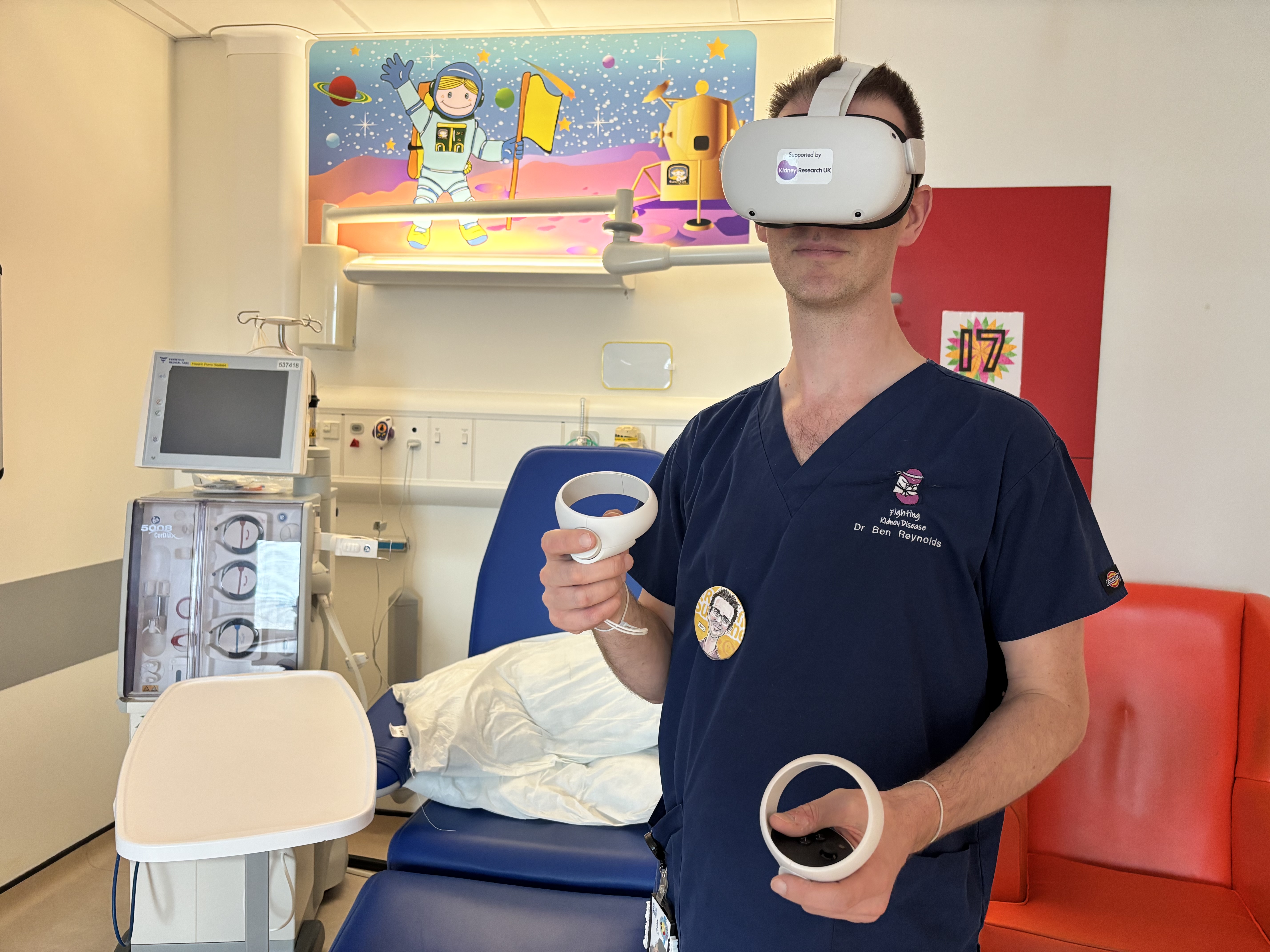
A senior clinician has told how spending time gaming during the Covid pandemic led to the development of a virtual reality tool for at-home kidney dialysis patients.
Dr Ben Reynolds, a Paediatric Nephrologist at the Royal Hospital for Children in Glasgow, used his own experience of playing virtual reality games to create a system that makes the dialysis process easier to understand and administer.
With funding grants from the charity Kidney Research UK and NHS Greater Glasgow and Clyde (NHSGGC) endowment funding, and support from the West of Scotland Innovation Hub, he worked with Edinburgh Napier University academic Professor Vassilis Charisis to develop the tool to help patients make informed decisions about the most suitable type of dialysis for them.
Currently, the training tool is used for patients and families who are considering peritoneal dialysis at home.
It is designed to educate them on what’s involved, and to provide an experience of setting up and delivering at-home sessions.
NHSGGC now has three VR headsets available for families, with Dr Reynolds explaining it has helped to allay fears and anxieties around the process as they are able to try it out virtually before setting up the sessions in real life.
Dr Reynolds is now working with Prof Charisis, a virtual reality expert, to extend the technology for those considering at-home haemodialysis.
Both forms of dialysis involve the removal of waste and excess water from the blood in patients with kidney failure.
The virtual experience removes the risk to patients as there is no physical impact, and reduces the need for the use of dialysis equipment in training.
Mum Amanda Flood’s seven-year-old son Peter was having dialysis for two years before he had a transplant just before his sixth birthday.
Peter was born with stage five renal failure and only about 10% kidney function because his bladder was blocked in the womb.
When the decision was made for him to go on dialysis, Amanda and her husband Graeme, who live in Aberdeen, were given training on administering dialysis to Peter at home.
They were able to use the virtual reality kit to get comfortable with the process before they were discharged from hospital and were doing it themselves.
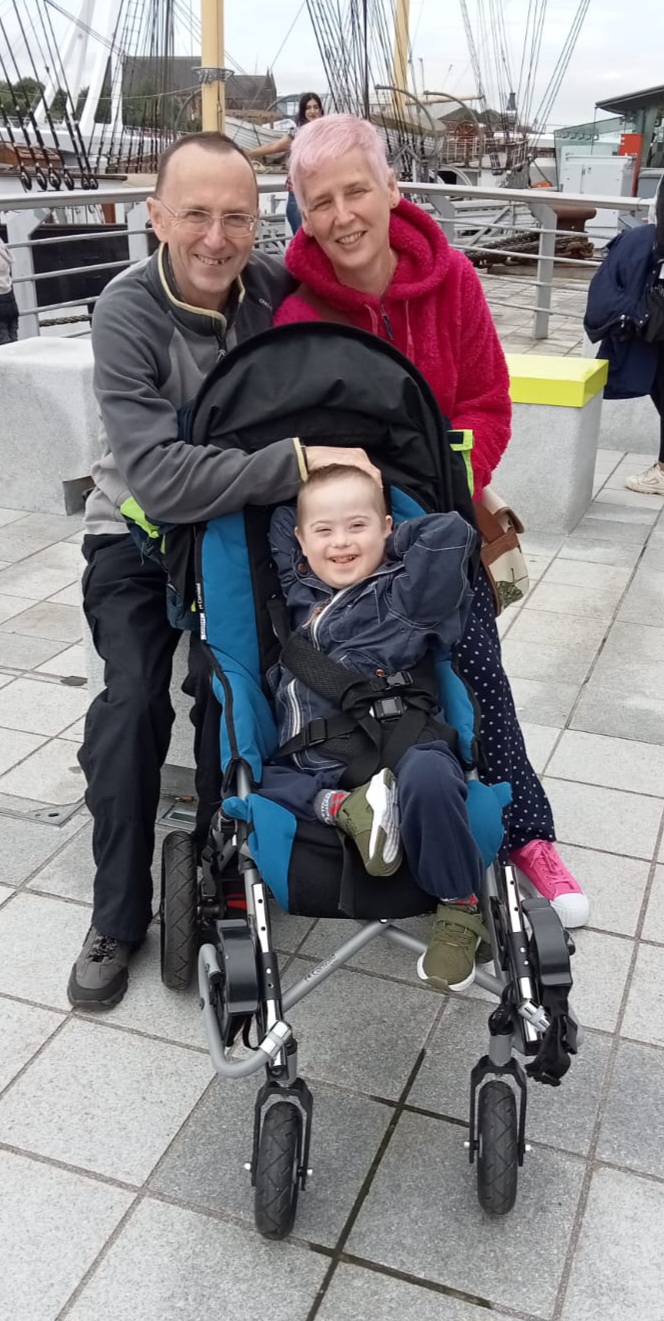
Amanda said: “I’d never used virtual reality for anything before so it was all new to us but the kit was amazing, and we were able to spend as long as we needed in Glasgow doing the training.
“It’s a very complex thing you’re getting trained to do - it’s basically your child’s lifeline - so the hospital staff were not going to discharge us until they were certain we could do it at home.
“There’s so much machinery and cables and bags of fluid involved, and learning how to set things up and do all the mixes yourself can be terrifying.
“But with the virtual reality kit you can try it out as many times as you like. It’s the exact same motions you’re going through, so it becomes like muscle memory by the time you’re doing it for real.
“The virtual reality kit also prompts you along with all the different steps you need to take so it really built up our confidence.”
Peter is now back at school after recovering well from his transplant operation, and enjoys going horse riding and playing tennis.
The Virtual Reality Kidney Dialysis Training Project was recently recognised at the Centre of Engineering Education and Development industry awards for its commitment to innovation and collaboration.
Dr Reynolds said: “During the pandemic I spent some time gaming and using virtual reality myself and quickly realised the potential it had to help train people in new processes.
“Dialysis can feel overwhelming for patients and families, particularly when they’re considering doing it at home, so we wanted to find a way to make the process clearer and less intimidating.
“The virtual reality experience allows people to see exactly what’s involved in a safe, realistic way, without any risk.
“We’ve found it helps to reduce anxiety and gives patients and families more confidence to make informed decisions about the type of dialysis that’s right for them.
“It has been successfully used by families across Scotland and we are keen to continue developing and improving it.”
Professor Vassilis Charisis said: "Emerging technologies such as virtual reality are no longer simply tools for the clinic or the training room – they are becoming the means to bring genuinely personalised, continuous care into people's homes and lives. That, for me, is where their true transformative potential lies.
"This tool is the culmination of more than five years of co-design with clinicians, nurses, patients, and families.
"We believe it can significantly reduce training time, patient anxiety and the need for repeated hospital visits.
"The resulting reduction in patient travel also delivers environmental benefit alongside clinical and human impact.
"Our collaboration ensured that every aspect of the simulation was shaped by the people it was designed to serve."
Dr Samantha Lawes, director of research development and partnerships at Kidney Research UK, said: "Dialysis is complex and relentless. Attending dialysis sessions in hospitals and clinics three days a week takes children away from their education and parents and carers away from their jobs.
“Therefore, tools which empower families with the confidence and understanding to carry out their own dialysis at home can be nothing short of life changing."